
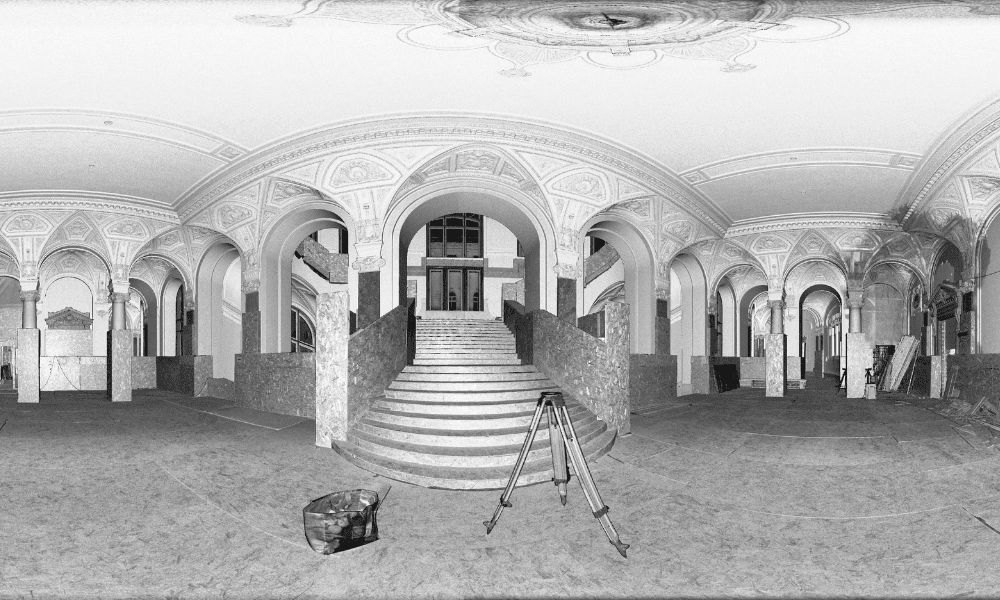
When people think of BIM, the first thing that often comes to mind is a detailed, three-dimensional building model. However, the value of the technology primarily lies in the information associated with the model. The accuracy, structure and usability of this information fundamentally determine how effectively the model can support the different stages of a project.
A well-structured BIM model can be used for a variety of tasks. It can facilitate collaboration between disciplines and the identification of clashes, while also supporting quantity determination and construction preparation. With appropriate data content, it can also serve as a valuable source of information for subsequent operations.
A usable BIM model therefore requires accurate, consistently structured and reliable data. Three-dimensional geometry is only one part of this. In this article, discover how a well-structured and usable BIM model is built, what role structured data plays within it, and how appropriate information management supports the entire project lifecycle.
A cikk tartalma
- A BIM Model Is More Than Three-Dimensional Geometry
- When Can We Say That a BIM Model Is Truly Usable?
- Objects, Parameters and Classification: The Foundations of BIM Data Structure
- How Does a BIM Model Produce a Usable Quantity Take-Off?
- BIM Audit: When We Check More Than Just Geometry
- IFC: How Do We Transfer BIM Information?
- The Role of the Common Data Environment
- The Same BIM Model Cannot Be Used for Every Purpose Without Modification
- What Are the Benefits of Well-Structured BIM Information?
- The True Value of BIM Lies in Information
A BIM Model Is More Than Three-Dimensional Geometry
A traditional 3D model is primarily used to represent the geometry of a building. A BIM model, by contrast, is made up of intelligent objects that not only have a shape and location but can also contain various properties.
In the case of a wall, for example, not only its position, length or thickness can be stored. The object may also contain:
- structural type,
- material,
- fire resistance class,
- acoustic or thermal properties,
- identifier,
- classification,
- manufacturer information,
- or even data required for subsequent operations.
This is what fundamentally distinguishes BIM from a simple three-dimensional model. The objects within the model contain information, and within an appropriate system, this data can be searched, filtered, checked and transferred.
BIM is therefore not merely a visualisation technology, but a structured approach to information management.
When Can We Say That a BIM Model Is Truly Usable?
The usability of a BIM model is not determined by the amount of data alone. What matters is that the required information is available at the right time and within a clearly defined structure.
A model may contain hundreds of parameters. If these are incomplete, inconsistent or recorded according to different logic, the practical use of the data can become difficult.
For this reason, it is advisable to determine at the very beginning of the project what information will be required during each project phase. The roles responsible for producing the data must be defined, together with the data structure to be used and the processes for checking and transferring information.
One of the fundamental principles of BIM information management is the creation of fit-for-purpose information of appropriate quality. This ensures that the data collected genuinely serves the needs of the project and supports the work of its participants.
Objects, Parameters and Classification: The Foundations of BIM Data Structure
For reliable project information to be extracted from a BIM model later on, a consistent structure is required from the modelling stage onwards.
Objects
A BIM model is made up of objects. A door, for example, appears in the model as an individual building element with defined properties and information. Walls, slabs, mechanical equipment and pipework can be managed in the same way.
This object-based structure makes it possible to search, filter and query model elements later based on the properties assigned to them.
Parameters
Information associated with objects is stored in parameters.
These may include geometric data, such as:
- length,
- area,
- volume,
- height,
but they may also include non-geometric information, such as:
- type,
- material,
- manufacturer,
- product code,
- maintenance information,
- status,
- classification.
Well-structured parameterisation enables the BIM model not only to represent the building visually, but also to describe it.
Classification
Effective use of a BIM model also requires a consistent classification of objects. If designers or individual disciplines name and classify the same building element differently, this can significantly complicate subsequent automated data processing.
Classification provides a consistent system for identifying, grouping and searching for elements. AFMTEC’s previous material on the relationship between data and BIM also highlights the importance of precise definitions and consistent interpretation of data.
How Does a BIM Model Produce a Usable Quantity Take-Off?
One of the important advantages of BIM is that geometric quantities that can be used at different stages of a project can be extracted directly from the objects within the model. For example, the model can be queried to determine the number of doors, the total surface area of a particular wall type, the length of pipework belonging to a specific system, or the volume of a structural element. It is also possible to examine the total quantity of a specified object type.
This process is known as model-based quantity extraction, or Quantity Take-Off (QTO). The reliability of the results is closely related to the quality of the BIM model and to the accuracy and structure with which individual elements have been incorporated into it.
A missing or incorrectly categorised element, inaccurate geometry, duplicated objects or the use of an inappropriate object type can all distort the quantities extracted from the model. For this reason, the results of automated queries should always be evaluated with consideration for the model’s structure and data quality.
Reliably usable data therefore requires a consistently structured and properly checked BIM model. Automated quantity extraction can make the production of information faster, while the accuracy of the results continues to depend on the quality of the data contained within the model.
Data Extracted from the Model Must Also Be Checked
A common misconception regarding the use of BIM is that data generated from the model can automatically be considered accurate and reliable. However, the extracted information always reflects the current state of the model and the quality of the data recorded within it, meaning that errors introduced during modelling can also affect the results of subsequent queries.
Problems may be caused, for example, by a missing object or inaccurate geometry, but the results can also be affected by an incorrectly modelled structure, the use of discipline-specific models with different levels of detail, or an incorrect or missing attribute. Inconsistent naming, incorrect classification and duplicated elements within the model can likewise reduce the reliability of the information that can be extracted.
Some of these issues are difficult to detect through visual inspection, meaning that the data content of a model that appears correct in a three-dimensional view may still be incomplete or inaccurate for a particular intended use. Regular checking and validation of the BIM model therefore play an important role in maintaining data quality and ensuring that information derived from the model can be used reliably throughout the project.
BIM Audit: When We Check More Than Just Geometry
During a BIM audit, we examine how well the model, the associated documentation and the information management processes comply with the requirements defined in advance for the project. The review provides a comprehensive overview of the quality of the BIM process and can therefore cover considerably more areas than clash detection alone.
The audit may include checking the structure of the models and the use of objects, as well as examining whether the required parameters are available and whether naming conventions are applied correctly. Other important considerations may include the correctness of classification, the completeness of information, coordination between discipline-specific models and the quality of data exchange. The review may also extend to the BIM documentation associated with the project.
Regular checking creates an opportunity to identify and correct potential deficiencies and errors during the earlier stages of the project, before the relevant information is required in a subsequent workflow.
AFMTEC’s previous material on BIM audits likewise treats the audit as a comprehensive process that, in addition to examining the models, also covers the associated documentation, collaboration and information management processes.
IFC: How Do We Transfer BIM Information?
Participants in construction projects often work in different software environments. Architects, structural engineers, building services engineers, contractors and operators may all use different systems, making it particularly important that project information can be reliably transferred and processed between individual platforms.
This is where IFC, or Industry Foundation Classes, plays an important role. This open data exchange format enables structured model information to be transferred between different BIM software applications. The Open BIM approach is based on this open, standards-based collaboration, allowing project participants to connect to the shared BIM process regardless of the systems they use.
During IFC export, however, it is advisable to check whether the required information has been transferred correctly to the receiving system. This includes verifying the presence of objects and the preservation of relevant properties, as well as checking the correctness of classification. Attention must also be paid to ensuring that the geometry can be interpreted correctly and that the transferred data remains genuinely usable in subsequent workflows.
Reliable data exchange therefore requires not only the use of an appropriate file format, but also conscious information management and regular checking.
The Role of the Common Data Environment
Effective BIM information management requires more than just good models.
It is also essential that project participants know:
- which model is current,
- which document is valid,
- who modified a file,
- when the change was made,
- and what approval status the information has.
This is supported by the Common Data Environment, or CDE.
The purpose of the CDE is to ensure that project information is available within a structured, controlled and version-tracked environment.
This reduces the risk of different participants working from different versions of the design and also makes changes to information traceable.
The Same BIM Model Cannot Be Used for Every Purpose Without Modification
The usability of a BIM model always depends on the purpose for which it is created.
Different information is required by:
- the designer,
- the contractor,
- the client,
- and the operator.
This is particularly evident in the difference between as-built and operational BIM models.
The as-built model primarily documents what was built and how it was built.
The operational model, by contrast, addresses how the completed building can be operated and maintained efficiently.
This may require, for example:
- maintenance cycles,
- manufacturer data,
- warranty information,
- asset identifiers,
- operational documentation,
- or connections to FM systems.
The operational model is therefore not simply a more detailed as-built model, but a database developed for a different information purpose.
This clearly demonstrates why, in BIM, the first question should always be: what do we want to use the model for?
Only then should we determine what data it needs to contain.
What Are the Benefits of Well-Structured BIM Information?
The value of a properly developed BIM model can extend throughout the entire project lifecycle.
During Design
Models from different disciplines can be coordinated, discrepancies and clashes can be identified earlier, and information can be managed in a more structured way.
During Construction
An accurate and verified model can support coordination, quantity determination, change tracking and on-site decision-making.
At Handover
At the end of the project, not only drawings and documents can be handed over, but structured digital information as well.
During Operations
If operational information requirements are defined at an early stage of the project, the model can later be developed into a database that supports the operation, maintenance and further development of the building.
In this way, the BIM model is not a single-use project deliverable but, with appropriate information management, can become a long-term usable digital resource.
The True Value of BIM Lies in Information
The three-dimensional model is the most readily visible aspect of BIM technology, but from the project’s perspective, the quality and usability of the associated information are equally important. The data assigned to objects, a consistent data structure, consistent classification and controlled data exchange together create the information environment on which project participants can rely in their work.
The usability of a BIM model should therefore always be assessed in relation to the specific task and project objective. Does it contain the necessary information, is that information structured appropriately, and is it sufficiently reliable for project participants to work on its basis? These questions fundamentally determine the practical value of the model.
Creating the appropriate information framework requires deliberate planning from the very beginning of the project. It is advisable to define information requirements, data structures and the responsibilities of individual participants in advance, and then align the modelling, data management, checking and handover processes accordingly. This allows the information generated as the project progresses to build consistently upon what came before and helps ensure that the model remains usable in subsequent project phases.
AFMTEC’s experts support their partners from the development of BIM strategies and model audits through information management and digitalisation to the development of BIM systems suitable for operational purposes. At the heart of the process is the creation of a reliable, structured digital information system that supports both the day-to-day work of project participants and informed decision-making.
A properly structured BIM model can thus become a continuously usable source of information throughout the project, connecting different participants and workflows while contributing to consistent data management from design through construction to operations.
Make Your BIM Model Truly Usable!
If you would like your BIM model to provide reliable, structured information that can genuinely be used throughout the project, AFMTEC’s experts can support you throughout the entire process. From developing a BIM strategy and auditing models to information management and solutions for operational purposes, we help create a digital environment tailored to the actual needs of your project.
Contact us and consult with our experts about how to make your BIM process more transparent, reliable and usable in the long term!